Oct 19,2026
Drying Scotch Bonnet Peppers: What Works, What Wastes a Crop
Thick walls and a high water content make scotch bonnets one of the slowest peppers to dry. Here are the temperatures, times, and checks that keep a batch bright, hot, and safe to store.
The short answer: halve or slice the pods, dry them at 125 to 135 degrees F (52 to 57 degrees C), and judge the batch only after it cools and snaps instead of bending. Whole scotch bonnets dried at room temperature rarely get there, because the same thick flesh that makes them a fine sauce pepper also holds on to water.
Those figures are typical for a mature pod, not a promise. Humidity, pod size, and how tightly the tray is loaded can move drying time by several hours, and a batch that fails the bend test will mold in the jar no matter how good it looked on the tray.
Why Scotch Bonnets Dry More Slowly Than Cayennes and Piquins
Anatomy explains most of the gap. Scotch bonnets belong to Capsicum chinense, the same group as habaneros, and they carry several traits that work against fast drying.
- Water content: a ripe pod is roughly 85 to 90 percent water by weight, against 75 to 80 percent for many thin-skinned Capsicum annuum varieties.
- Wall thickness: two to four millimeters of flesh insulates the damp core, so the outside can feel leathery while the inside is still wet.
- Waxy cuticle: the glossy skin resists moisture loss, which is why whole pods dry so unevenly.
- Climate: in humid or coastal air, room-temperature drying is a race against mold rather than a dependable method.
The knife does most of the work, then. Halving the pods or cutting them into quarter-inch rings can shorten drying time by half and even out the result. Yield is the check: scotch bonnets lose about eight parts in nine, so one kilogram of fresh pods should give 120 to 150 grams of finished flakes.
Dehydrator, Oven, Air, or Sun: Choosing a Method
Every method trades speed against control. These figures assume pods cut into halves, in a single layer, in moderate indoor humidity.
| Method | Temperature | Typical time | Main risk |
|---|---|---|---|
| Dehydrator, halved | 125-135 F (52-57 C) | 8-14 hours | Overloaded trays, strong fumes |
| Dehydrator, whole | 125-135 F (52-57 C) | 18-30 hours | Damp cores, uneven drying |
| Oven, door ajar | 130-150 F (55-65 C) | 6-10 hours | Hot spots that cook the pods |
| Air drying indoors | 68-75 F (20-24 C) | 2-4 weeks, often fails | Mold before crispness |
| Sun drying | 85-95 F (29-35 C) | 3-7 days, turning daily | Dust, insects, overnight damp |
Which one to pick
A dehydrator with an adjustable thermostat is the most forgiving tool for thick-walled chiles: it holds a low, steady temperature while the fan carries moist air away. A home oven can work, but many overshoot 160 degrees F on their lowest setting, cooking the pods instead of drying them; check yours with a separate thermometer first. Air and sun drying suit thin-skinned varieties far better.
Preparation and Safety: Gloves, Vents, and Clean Trays
Drying concentrates whatever is in the pod: the water leaves, the capsaicin does not. A few habits keep the job comfortable.
- Wear nitrile gloves for trimming and slicing, and keep gloved hands away from your eyes until the tray is loaded.
- Cut on a dedicated board, then wash knives, boards, and trays in hot soapy water.
- Run the dehydrator where fumes can escape: a garage, a covered porch, or a kitchen with the extractor fan on and a window open.
- Keep chili trays away from fruit trays, because capsaicin oils and aroma settle into plastic and gaskets.
Testing, Conditioning, and Storing the Finished Batch
Dryness is a property of the pod, not a stopwatch reading. Let the pods cool completely, since warm peppers feel softer than they are, then test one from the middle of the tray.
- Bend the pod at the shoulder. It should snap or crack cleanly.
- Squeeze near the stem, the thickest point. There should be no soft give.
- Tear one open. The inside should be dry and papery, not sticky or dark.
- Recheck the thickest pods. They finish last and hide moisture best.
Then condition the batch, which catches the moisture you cannot see. Fill a glass jar about two-thirds full, seal it, and shake it once a day for a week. If fog forms on the glass or the pods clump together, put them back in the dehydrator for two more hours and repeat the test.
If it bends, it is not done - and a jar of almost-dry peppers is the most common way a good harvest is lost.
Store the batch in airtight glass, in the dark, away from the stove. Whole pods hold color and aroma for up to two years, flakes are best within a year, and powder fades fastest, so grind it in small batches. Grind outdoors or beside an open window, wear a mask and eye protection, and let the dust settle before opening the lid.
Using Dried Scotch Bonnets Without Overdoing the Heat
Dried scotch bonnets are stronger by volume than fresh ones, since the water that diluted them is gone. A spoonful of crushed flakes can carry the heat of a much larger handful of fresh pepper, so season in small increments.
- Flakes: crush by hand or pulse briefly for jerk rubs, marinades, and dry spice blends.
- Powder: best for sauces and soups where even heat distribution matters.
- Rehydrating: cover with hot water for 20 minutes, then use the pods and the soaking liquid; both carry flavor.
- Whole pods: simmer them in stews and remove before serving when you want aroma without seeds.
When Home Drying Stops Scaling
A kitchen dehydrator handles a garden harvest well. It stops being practical once chili becomes an ingredient with a specification attached: the same heat in every lot, a defined particle size, a moisture level low enough to prevent spoilage, and paperwork a buyer can audit.
Commercial dehydration controls the drying air, the final moisture content, usually held under 10 percent, and microbiological testing against an audited food safety standard. Our own production moved from BRC grade A in 2010 to grade A+ in 2024, across two plants supplying food manufacturers in North America, Europe, and Asia. Our note on the difference between dried and dehydrated vegetables explains what changes in the finished ingredient when that level of control is applied.
For chili heat at production scale, dehydrated jalapeno is a common workhorse, supplied as flakes, granules, or powder that blend into seasoning systems without the batch-to-batch swings of a home dehydrator.
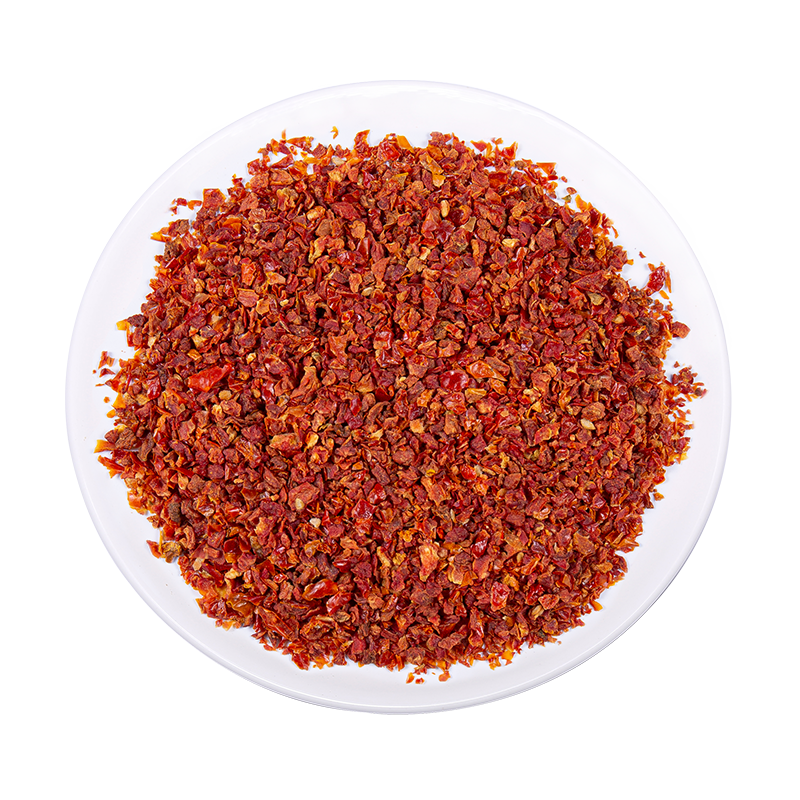
Dehydrated red pepper does the opposite job: it adds sweetness, color, and body so that a small amount of chili heat spreads evenly through a snack coating, a sauce base, or a dry rub.
Both come off the certified lines that carry the rest of the range, which is the real difference: a dehydrated vegetable manufacturer holds those tolerances lot after lot.
To sum up: cut the pods, hold the air at 125 to 135 degrees F, and judge the batch after it cools rather than by the clock. Thick walls and a waxy skin make scotch bonnets slower to dry than most chiles, and they punish shortcuts with mold.
Condition the dried pods for a week before storing them, keep them airtight and dark, and expect roughly one part dried flakes for every eight parts fresh pepper. Get those three things right and one harvest will season a year of cooking, with the heat exactly where you left it.